Textiles
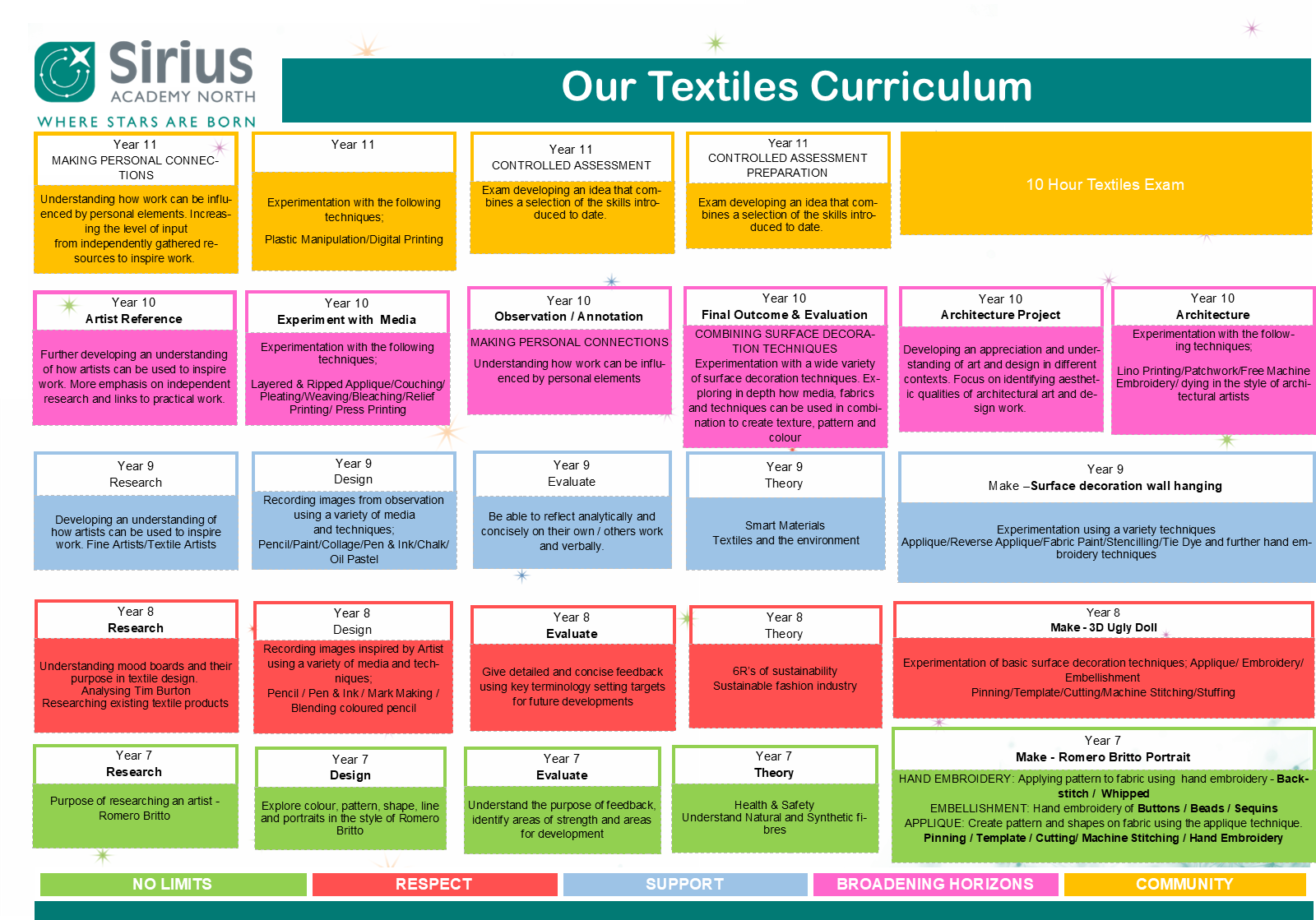
In Year 7, students produce an applique fabric portrait inspired by Romero Britto. Students learn how to research a theme, analyse the work of an artist and apply these skills through design work. Students are introduced to a range of textile fibres and materials, learning about their sources and properties. They will learn how fibres are turned into fabrics and what these can be used for before exploring creatively the practical skills: how to apply fabric paint and develop various hand embroidery techniques, embellishment whilst exploring applique.
In Year 8, students produce a 3D Ugly Doll inspired by the artist Tim Burton. Students will be introduced to basic design concepts, carrying out primary and secondary research, analysing existing toys and textiles products. Students will study the environmental impact of a range of materials and processes completing a lifecycle analysis of the product that they create. They will learn a variety of textiles decorative and construction skills and techniques and will work with acrylic felt to design and make a soft toy.
In Year 9, students produce an experimental project based on nature. They develop the skills set of working to brief, researching artists and designing a wall hanging. They will embark on learning a variety of textiles experimental techniques: Applique, reverse applique, quilting, as well as the dying process developing the knowledge of three different tie dye patterns to create a background for the wall hanging.
KS4 TEXTILES:
GCSE Art and Design: Textiles Exam board: AQA
This is an exciting and creative course that involves the creation of designs and products for woven, knitted, stitched, printed or decorative textiles that might have a functional or non-functional purpose. Students are required to work in one or more area(s) of textile design, art textiles.
- constructed textiles
- printed and dyed textiles
- surface pattern
- stitched and/or embellished textiles
- soft furnishings and/or textiles for interiors
- digital textiles
- installed textiles.
Students will study a range of artists, designers, art and design movements, and design history and respond to these in their own work. Students are taught through practical skills, in a series of small projects.
Students learn how to add colour and pattern to a variety of fabrics using a range of printing processes, dyeing, and embroidery and embellishment techniques, using a range of equipment and technology.
In Year 10, Students initially produce a portfolio containing a wide variety of surface decoration techniques based on natural forms and the investigation of textiles / fine artists who are inspired by nature. This becomes a personal technique file for future reference.
The second project, (60% of their mark) students work upon a final major project to develop and extend their skills. The project is based upon previous exam topics/theme and contemporary textile artist influence. The students use cultural references to influence their own work based upon personalised imagery.
In Year 11, The final unit is an exam-based unit (40% of their mark). The students will be provided with pre-exam material and a theme / influence to choose from for development. Students will produce a supporting portfolio of ideas and test samples to support the final piece they produce in a 10-hour practical timed exam. Students refine and develop the use of a wide variety of surface decoration techniques previously practiced supporting the making of their cultural project and exam project. Techniques are developed in complexity and combined to make interesting textured, layered outcomes.